
Rope Access Training
IRATA Level 3 system
Designed to provide a first-class experience for work-at-height professionals and to meet the highest standards of the Industrial Rope Access Trade Association (IRATA).
For whom?
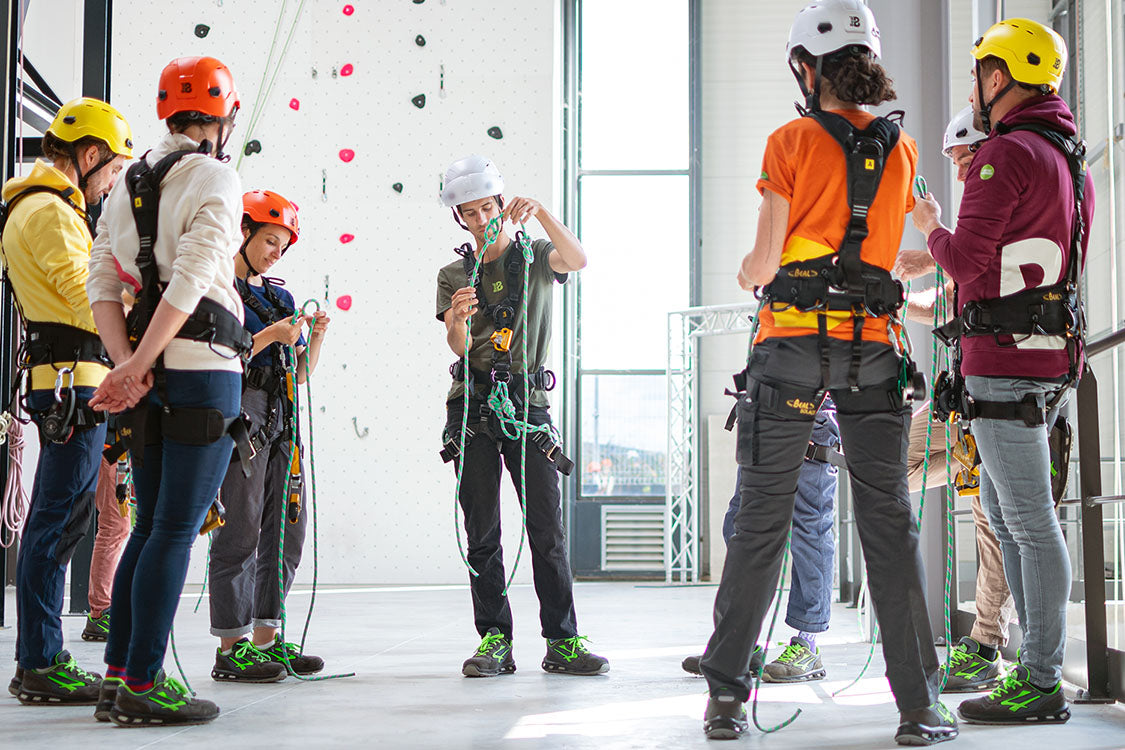
This training is for experienced IRATA Level 2 technicians wishing to move into a supervisory role and become responsible for the safety, planning, and coordination of rope access operations according to IRATA standards.
For Level 3 technicians whose certification is nearing its expiry limit (3 years)
Book My SessionMethods used and assessment procedures
- Theoretical contributions in the classroom with educational materials.
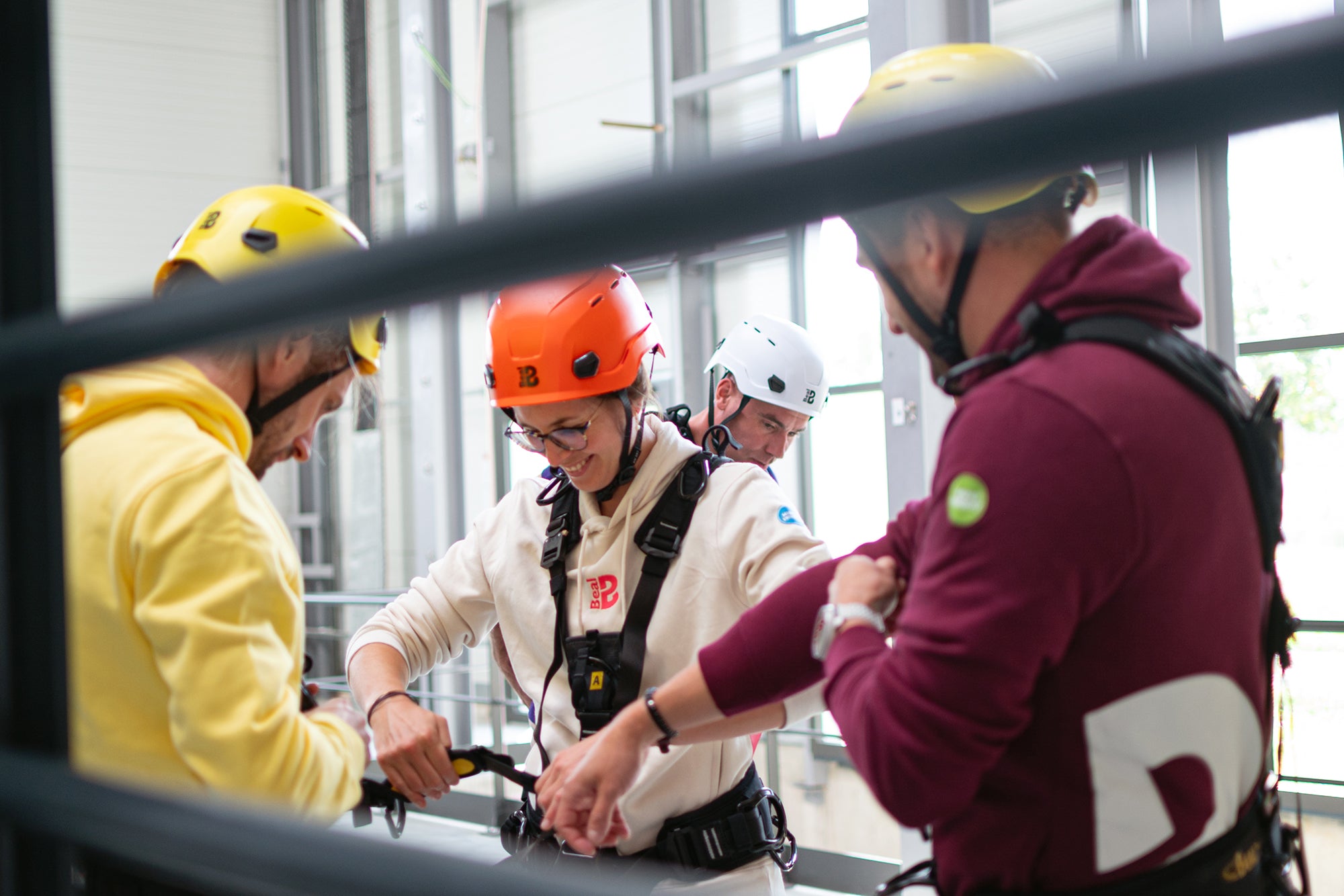
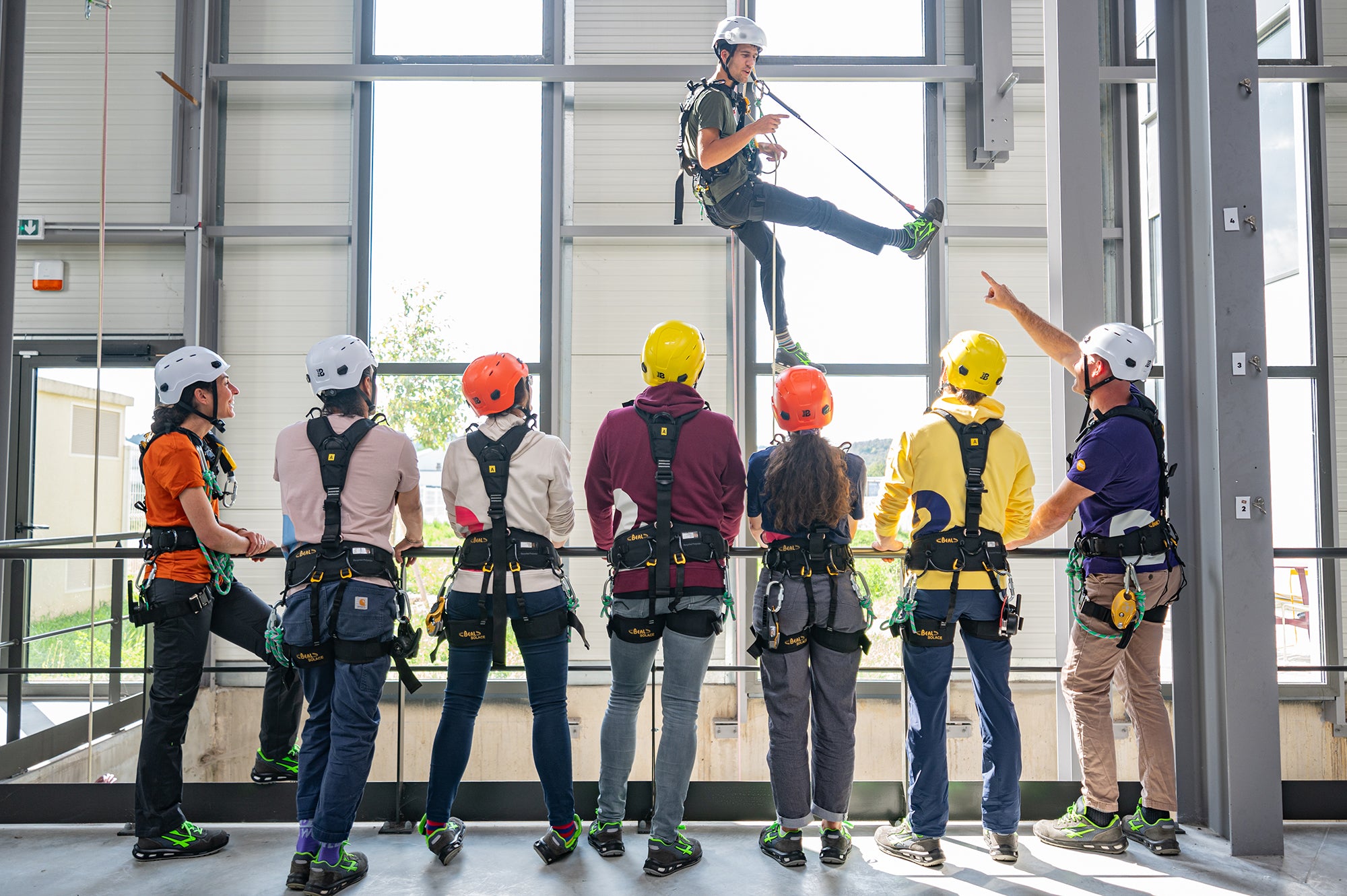
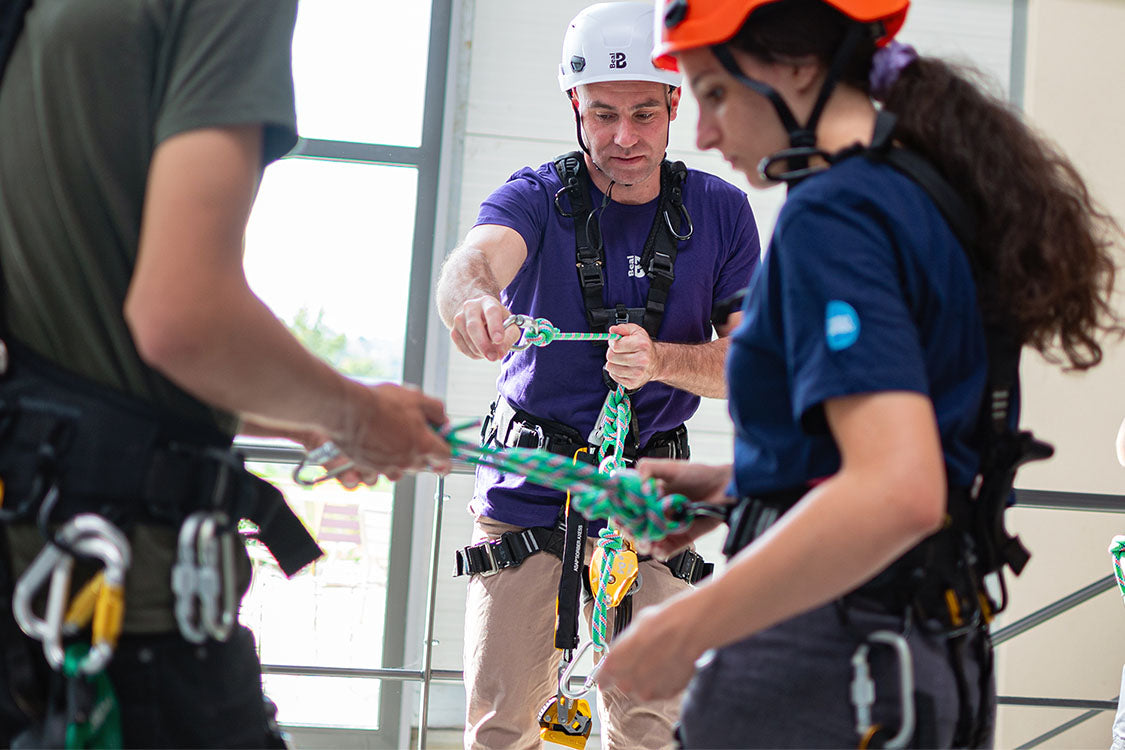
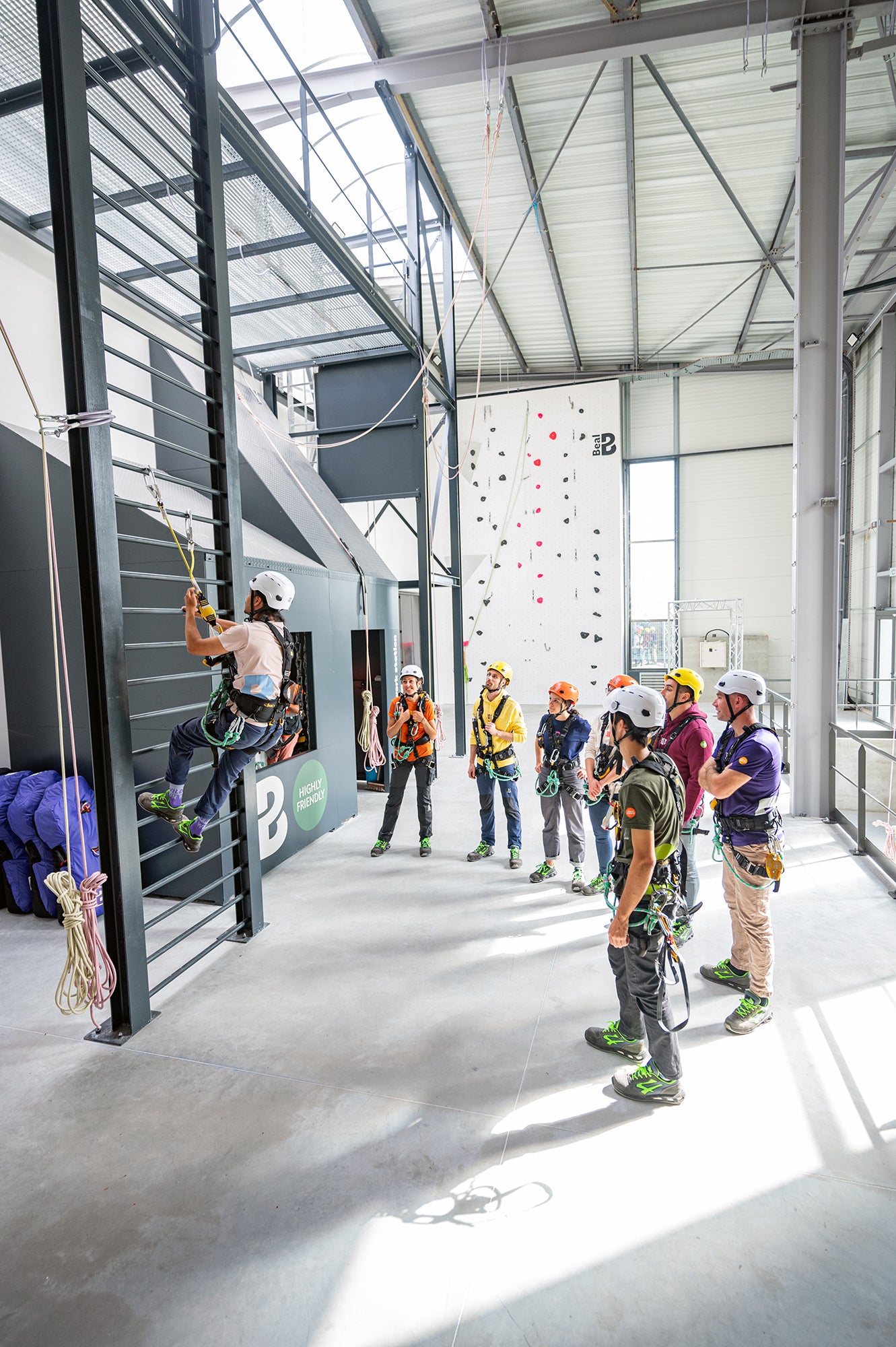
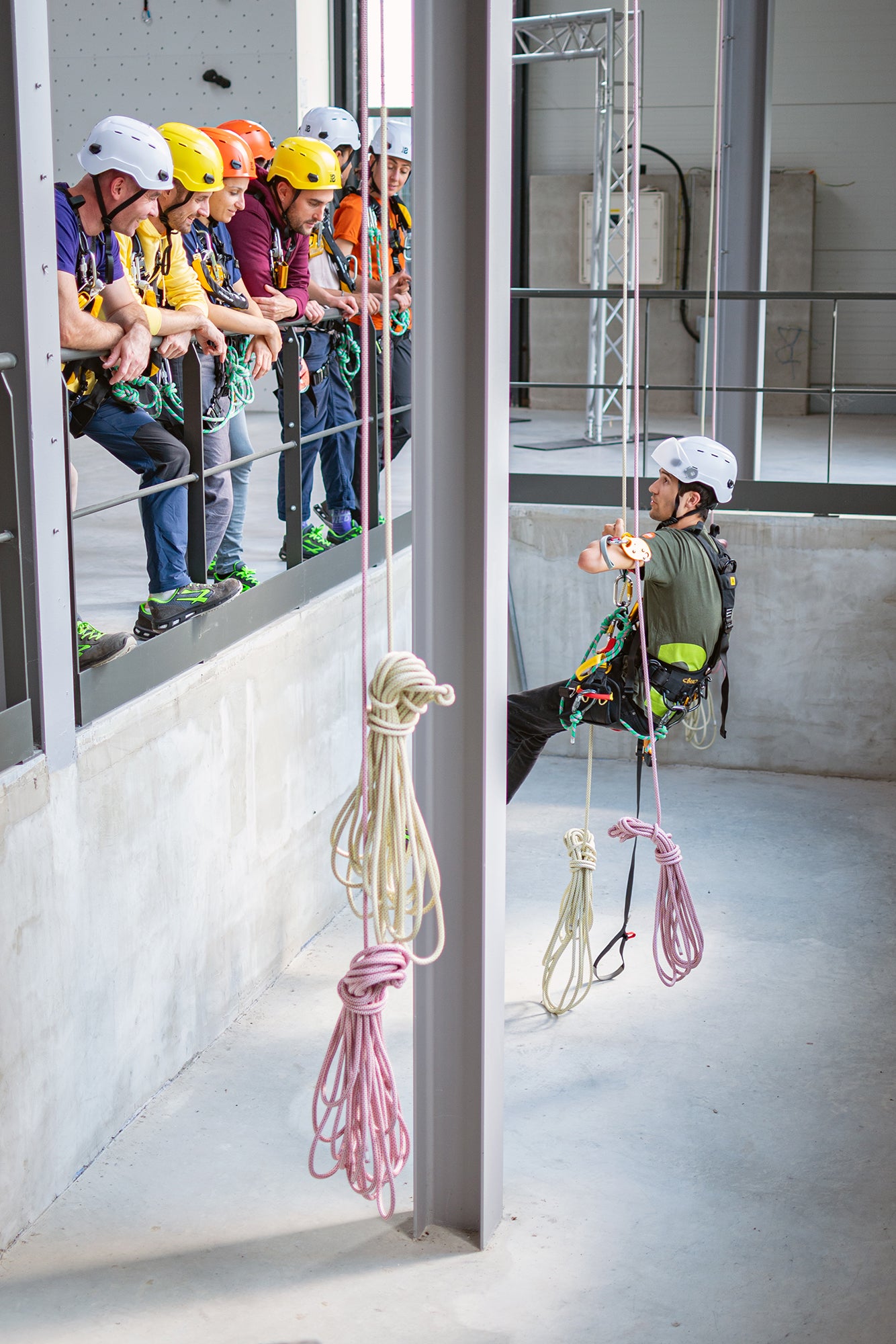
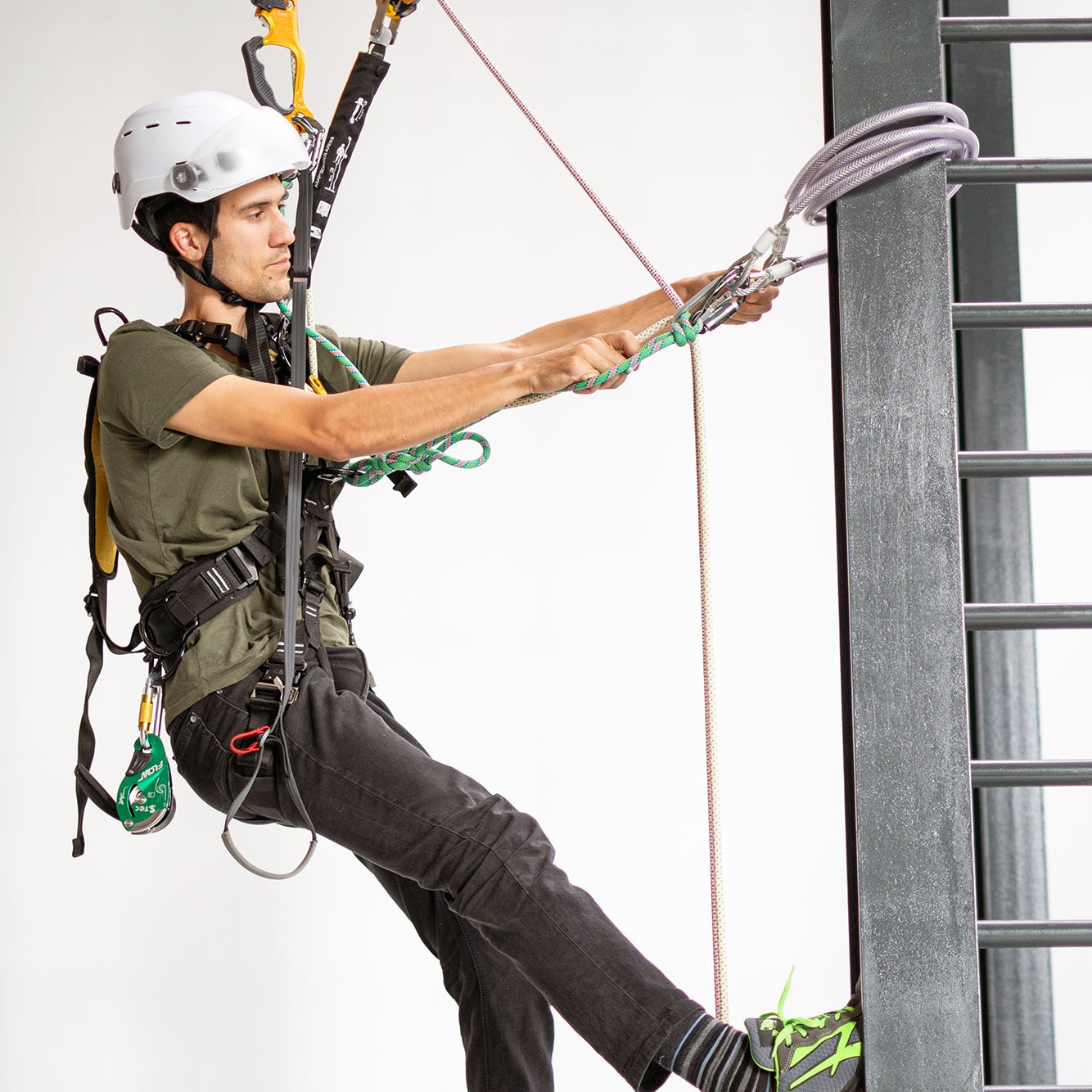
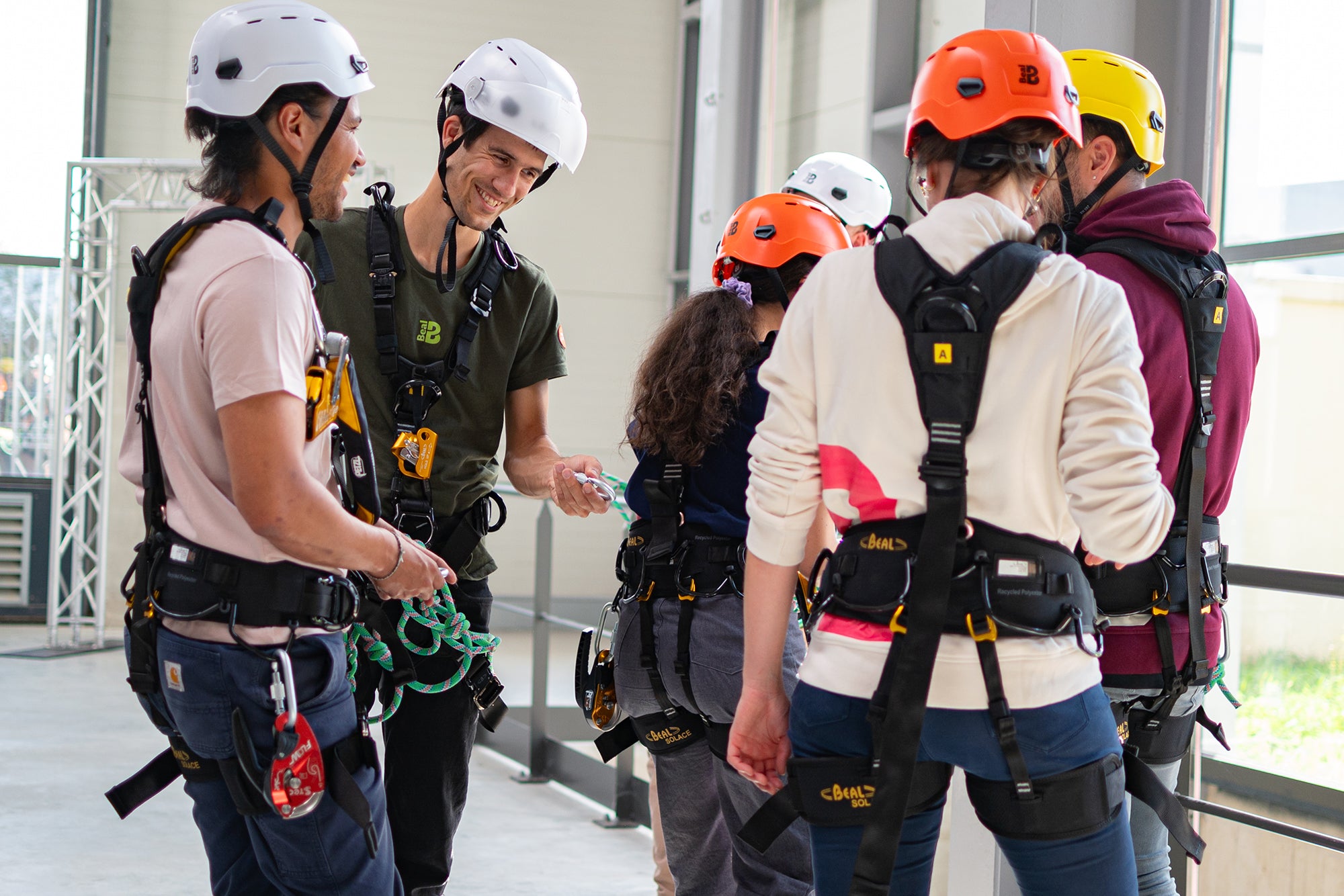
- Practical exercises carried out in the training hall, under the supervision of the instructors.
- Case studies, real-life simulations, and rescue exercises.
- Final skills validation by an independent IRATA assessor.
Skills targeted at the end of the training
Upon completion of the training, the trainee will be able to:
- Demonstrate the knowledge and skills required at levels 1 and 2.
- Plan, supervise, and ensure the safety of a complete rope access operation in accordance with IRATA procedures.
- Assess risks, define anchoring systems, and coordinate level 1 and 2 teams.
- Execute all advanced rescue techniques and manage emergency situations.
- Monitor and control PPE, safety documents, and site compliance.
Prerequisites
Hold a valid IRATA Level 2 certification
- Provide proof of a minimum of 1,000 hours of practical rope access experience, logged in the official IRATA logbook, and 1 year of experience as a Level 2 technician.
- Medical certificate confirming no contraindications to working at height.
- Physical condition compatible with rope access activities.
- Sufficient command of the French language, both written and spoken (sessions can be organized in English; contact us for more information)
- Active IRATA Techconnect account upon entering training
- Valid SST certificate on the training date
Registration details
- Project study during an initial telephone interview.
- Provide a completed registration form.
- Logbook compliant with IRATA requirements for refreshers and levels 2 and 3.
- Valid first aid certificate for level 3.
Career path
- Access the RASS (Rope Access Safety Supervisor) certification – Supervision and risk management.
- Access the IRATA 3 Instructor certification.
Prerequisites
Hold a valid IRATA Level 2 certification
- Provide proof of a minimum of 1,000 hours of practical rope access experience, logged in the official IRATA logbook, and 1 year of experience as a Level 2 technician.
- Medical certificate confirming no contraindications to working at height.
- Physical condition compatible with rope access activities.
- Sufficient command of the French language, both written and spoken (sessions can be organized in English; contact us for more information)
- Active IRATA Techconnect account upon entering training
- Valid SST certificate on the training date
Registration details
- Project study during an initial telephone interview.
- Provide a completed registration form.
- Logbook compliant with IRATA requirements for refreshers and levels 2 and 3.
- Valid first aid certificate for level 3.
Career path
- Access the RASS (Rope Access Safety Supervisor) certification – Supervision and risk management.
- Access the IRATA 3 Instructor certification.
The training center is located in the Montplaisir industrial zone, 38780 Pont-Évêque, in the immediate vicinity of Vienne (38200) and approximately 30 minutes from Lyon.
Car
Access via the D41, free parking on site.
Public transport
From the SNCF train station in Vienne, take the regular bus line towards Pont-Évêque (stop less than a 5-minute walk from the site).
Bicycle access
Bicycle parking available at the building entrance.
Accessibility for people with disabilities
Our training courses are open to everyone.
For any specific request related to a disability or a course adaptation, we invite candidates to contact our disability liaison officer before registration to discuss possible accommodations (adaptation of equipment, pace, or educational materials). Compatibility with the training is assessed on a case-by-case basis to ensure the safety of participants and the achievement of educational objectives.
Annie DUSSUYER
07 64 44 39 53